Last updated 2026-08-18
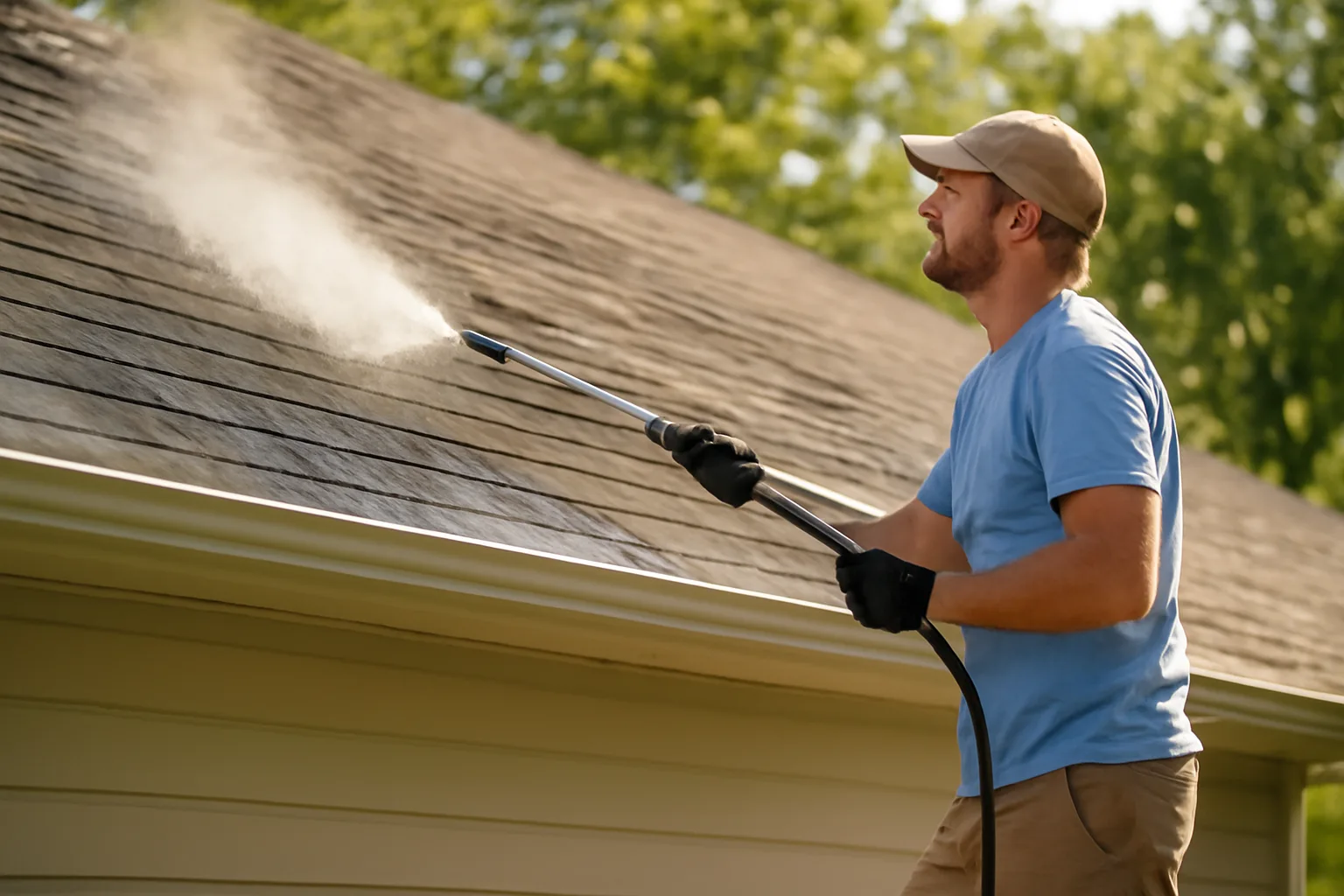
TL;DR
Soft washing in Georgia usually requires a Structural Pest Control License from the Georgia Department of Agriculture, because bleach solutions kill mold and algae, which are 'pests' under OCGA § 2-7-10. Plan on a $200 application fee, passing an exam, and carrying $100,000 insurance. House washes cost $200, $500 and take 1 to 3 hours.
Do you need a license for soft wash in Georgia?
Yes. If you spray a chemical that kills something living on a structure, Georgia treats you as a pest control operator, and you need a license. The Structural Pest Control Act defines a 'pest' to include "any fungus, weed, or other organism that is detrimental to structures." [1] Mold on siding and algae on a roof land inside that sentence. The Georgia Department of Agriculture (GDA) enforces the Act and requires anyone doing structural pest control for hire to hold a Structural Pest Control License. [2]
Here's the part most new operators miss. A bleach and surfactant mix is designed to kill the organism, more than rinse it away. That biocidal effect is the trigger. Call your service 'exterior cleaning' all you want; the chemistry decides how the state classifies you. There is no soft wash exemption written into Georgia law.
Some operators bet on staying invisible. They market cosmetic cleaning and hope nobody looks closely. That bet gets expensive. A state inspector who spots your truck, or one licensed competitor who files a complaint, can trigger a cease-and-desist order and a fine. Call the GDA's Structural Pest Control Division at (404) 656-3641, describe your exact mix and process, and ask for a written opinion. The gray area disappears the moment a compliance officer answers the phone.
How much does soft wash cost in Georgia?
A single-story house wash in Georgia runs $200 to $500. Roof soft washing runs $300 to $600, a driveway $150 to $300, and a deck $200 to $400. Those ranges come from aggregated 2025 contractor pricing data for Georgia. [3] Your final number moves with square footage, access, and whether a roof treatment is in the quote.
Most Georgia companies price one of two ways: by the square foot (roughly 15 to 30 cents) or a flat rate per job. Some tack on a fuel surcharge for rural routes.
Driveway and patio work sits at the bottom of the range. Roof work sits at the top because of dwell time, fall protection, and a heavier chemical mix. A 2,000-square-foot colonial in Atlanta might run $350 to $450. The same house in Valdosta might be $300 to $400, because there's more competition per capita. Pricing your own service? Pull three local competitors' advertised rates, then run one test job to lock down your real cost per gallon and your labor time. Guessing at those two numbers is how people underprice a whole season.
How long does soft wash take in Georgia?
A standard single-story house takes 1 to 3 hours, setup to final rinse. A roof alone runs 2 to 4 hours, depending on pitch and how much moss or algae is up there. [8] Driveways and decks move faster, often 45 minutes to an hour.
Add 30 minutes for equipment setup and another 20 for cleanup. Georgia's humidity and its afternoon thunderstorms can knock a job into the next day. No law sets a maximum time; the weather sets it for you. Start early in summer. Never spray during heavy rain, which dilutes your mix and turns your runoff into a problem you don't want to explain.
The Georgia soft wash licensing process step-by-step
Five steps, roughly 4 to 8 weeks, mostly study time and exam scheduling.
Step 1: confirm you need a license. If your mix kills algae or mold on a structure, you do. Step 2: apply for a Structural Pest Control License through the GDA. The application fee is $200 as of 2025, but confirm the current figure on the GDA's licensing page before you send money. [2] Step 3: study the category manual that matches your work. Soft wash most likely falls under General Household Pest Control (HPC), but ask the GDA directly before you order materials, because some inspectors may put roof work in a different category. Step 4: take and pass the written exam. Exams run at the GDA's Atlanta office and sometimes at regional sites. Step 5: after you pass, submit proof of liability insurance and pay the license fee.
One detail that trips people up: the license goes to the individual, not the company. Run a crew of four and each person is either licensed or working under a licensed supervisor. [2][4]
For how a neighbor handles the same question, read our guide on Alabama's license rules (/articles/state-guides/soft-wash-license-alabama). Georgia is stricter than most of the Southeast. A Florida or South Carolina playbook will not carry over.
Soft wash business license and local permits in Georgia
Past the pesticide license, Georgia wants a local occupational tax certificate, which most people just call a business license. You get it from your city or county. [6] Work across several cities and you need a certificate from each one.
You also register your business name with the state. A sole proprietor files a DBA with the clerk of superior court. An LLC or corporation files with the Corporations Division at the Secretary of State. [6]
No local permit usually adds a specific 'soft wash' line item. Some municipalities do enforce water discharge rules, though, and bleach runoff near a storm drain is exactly what those rules are built to catch. Call your local public works department before you wash anything near a drain.
Insurance you’ll need for soft washing in Georgia
Georgia requires every structural pest control licensee to show financial responsibility, and in practice that means a minimum $100,000 liability policy. OCGA § 2-7-20 says the commission "shall require each licensee to furnish evidence of financial responsibility." [4]
Most GDA-licensed firms carry at least $100,000 in general liability, and plenty carry $500,000, because bleach damage claims get pricey fast. One overapplied roof or one dead flowerbed can eat a $100,000 policy's goodwill in a hurry.
Add workers' compensation if you have employees, and commercial auto for any truck or trailer. SoftWashPath's $149 Chem + Dwell + Insurance Kit includes a carrier recommendation for Georgia operators and a dwell-time sheet that keeps you from overapplying, which is one of the most common claim triggers in this trade.
What if you soft wash without a license?
It's a misdemeanor. OCGA § 2-7-106 states that a person who violates the Structural Pest Control Act "shall be guilty of a misdemeanor." [5] A first offense can mean a fine up to $1,000, a cease-and-desist order, and the possibility of jail time, though jail is rare.
The GDA's enforcement officers hunt for unlicensed operators through online ads, social media, and tips from licensed competitors who don't appreciate being undercut by someone skipping the exam.
The criminal risk is real, but the business risk hurts more. Get shut down mid-season and you lose every booked job on the calendar. Some Georgia counties pile on civil penalties. A conviction can also block you from getting a license later. Compliance costs less than one lost washing season, and it costs a lot less than being locked out of the trade for good.
Common mistakes Georgia soft wash startups make
The biggest one is assuming Georgia treats soft wash like pressure washing. It does not. Pressure washing does its work with water and force. Soft washing does its work with a chemical biocide, and that chemical is what pulls you under the Structural Pest Control Act.
Other common misses: skipping the exam because you already know how to hold a spray wand, buying a cheap liability policy that won't cover chemical damage, and forgetting to register the business both locally and with the state.
A lot of startups also ignore chemical storage. The GDA can inspect where you keep your product and can ask for secondary containment on bleach drums. Put down a concrete pad and keep a spill kit before your first inspection, not after.
How to keep your Georgia soft wash license current
GDA structural pest control licenses expire every year. The renewal window runs November 1 to December 31. [7] You pay a renewal fee (confirm the exact amount annually, since it changes) and show proof of any required continuing education units.
CEU counts depend on your license category. Expect at least 6 hours of approved training per year. Georgia operators often take courses through the University of Georgia Extension or the National Pest Management Association.
Keep every certificate. The GDA audits a share of renewals, and "I did the training but lost the paper" is not a defense. Miss the December 31 deadline and your license lapses, which means reapplying and possibly sitting idle for weeks in the middle of your busy stretch.
Frequently asked questions
Do you need a license for soft wash in Georgia?
Yes, if your mix kills mold, algae, or other organisms on a structure. Georgia's Structural Pest Control Act treats bleach-based soft washing as structural pest control, which requires a Structural Pest Control License from the Georgia Department of Agriculture. [1][2]
How much does soft wash cost in Georgia?
A typical house wash runs $200 to $500. Roof cleaning runs $300 to $600. Driveways and decks run $150 to $300. These ranges come from 2025 contractor pricing data for Georgia. [3] Your actual cost depends on square footage, chemical strength, and travel.
How long does soft wash take in Georgia?
A single-story house takes 1 to 3 hours, a roof 2 to 4 hours, and a driveway about 1 hour. Humidity and afternoon storms in Georgia can stretch those times. No regulation sets a minimum or maximum duration. [8]
What license does the Georgia Department of Agriculture issue for soft wash?
The GDA issues a Structural Pest Control License with a category that matches the work. The most likely category is General Household Pest Control (HPC). Contact the GDA Structural Pest Control Division to confirm the exact category before you apply. [2]
Can I soft wash without a license if I only clean and don’t kill mold?
Probably not. The GDA looks at what the chemical does, not what you meant to do. If the bleach kills mold, the state calls it pest control. Marketing it as 'exterior cleaning' does not exempt you. The only license-free path is plain water with no chemical biocide.
What are the penalties for unlicensed soft washing in Georgia?
Violating the Structural Pest Control Act is a misdemeanor. Penalties include fines up to $1,000, a cease-and-desist order, and possibly a permanent bar from licensing. [5] Local governments can add civil penalties on top of that.
Do local cities require a separate soft wash license?
Most Georgia cities and counties require a general business license, or occupational tax certificate, for any business operating inside their limits. That's on top of the state structural pest control license. [6] Some municipalities also enforce stormwater rules.
How do I get a structural pest control license in Georgia?
Apply through the GDA with a $200 fee, study the exam manual for your category, pass the written exam, submit proof of $100,000 liability insurance, and pay the license fee. The whole process takes 4 to 8 weeks. [2][4]
What insurance is required for soft wash in Georgia?
State law requires a minimum $100,000 liability policy for structural pest control licensees. Many operators carry $500,000 to cover chemical damage claims. Workers' comp is required if you have employees. [4]
Does Georgia require an exam for soft washing?
Yes. The GDA requires a written exam for the structural pest control license. The exam covers pesticide law, safety, and application technique. You have to pass it before a license gets issued. [2]
What chemicals can I use legally for soft wash in Georgia?
Sodium hypochlorite (pool bleach) and surfactants are allowed, but you have to follow every product's label directions the way a pesticide label requires, because Georgia treats the mix as a pesticide under the Structural Pest Control Act. Any chemical sold with a pesticide claim requires compliance with federal FIFRA labeling. The GDA can inspect your solution tank and storage.
How do I register a soft wash business in Georgia?
File a DBA with the superior court in the county of your principal office, and register any LLC or corporation with the Georgia Secretary of State. Then get occupational tax certificates from each city or county where you work. The state's Business Launchpad at georgia.gov walks you through it. [6]
Does a soft wash business in Georgia need a pesticide storage permit?
Not a separate permit, but the GDA can inspect your storage during a compliance visit and can require secondary containment for bleach drums and other pesticides. A concrete pad with berms and a spill kit is standard practice for staying ahead of enforcement.
Can I use my Florida soft wash license to work in Georgia?
No. Georgia has no blanket reciprocity with Florida for structural pest control. You need a separate Georgia license. Some exam requirements might be waived if you hold an equivalent out-of-state license, but you still apply and pay the Georgia fee. Confirm with the GDA. [2]
Sources
- Georgia General Assembly - OCGA § 2-7-10: Definition of “pest” includes fungus, weed, and organisms detrimental to structures.
- Georgia Department of Agriculture - Structural Pest Control Licensing: GDA requires a structural pest control license for anyone applying chemicals for pest control on structures.
- HomeAdvisor - Pressure Washing Cost: Typical house washing costs $200, $500; roof $300, $600; driveway $150, $300 in Georgia.
- Georgia General Assembly - OCGA § 2-7-20: Licensed structural pest control companies must furnish evidence of financial responsibility.
- Georgia General Assembly - OCGA § 2-7-106: Violations of the Structural Pest Control Act are misdemeanors punishable by fines up to $1,000.
- Georgia.gov - Start a Business: Businesses must register with the Secretary of State and obtain local occupational tax certificates.
- Georgia Department of Agriculture - Structural Pest Control License Renewal: Annual renewal window November 1, December 31 with fee and CEUs required.
- Angi - How Long Does Pressure Washing Take?: A typical house soft wash takes 1 to 3 hours, roof 2 to 4 hours.
- US EPA - Pesticide Labels and FIFRA Requirements: Chemicals sold with a pesticide claim must comply with federal FIFRA labeling.