Last updated 2026-08-18
TL;DR
Connecticut has no single statewide soft wash license, but most operators need a Home Improvement Contractor registration through the Department of Consumer Protection, which renews every two years. Sole proprietors may also need a local business license. A residential soft wash job typically runs $200 to $600 and takes two to four hours. Confirm current fees directly with the DCP.
Do you need a license for soft wash in Connecticut?
Short answer: yes, almost certainly, but the license you need isn't a "soft wash license." Connecticut doesn't issue trade-specific licenses for exterior cleaning the way it does for electricians or plumbers. What it does require is a Home Improvement Contractor (HIC) registration for anyone who contracts to perform work on residential property for compensation. Soft washing a house, roof, or driveway counts.
The HIC registration lives with the Connecticut Department of Consumer Protection under Connecticut General Statutes Section 20-419 and following [1]. The statute defines a "home improvement" broadly enough to pull in cleaning services performed on or around residential structures, and DCP enforcement has historically treated exterior cleaning companies as subject to this requirement.
There's a second layer that catches some operators off guard. If your business employs workers, even one, Connecticut requires workers' compensation coverage before any work begins [2]. That's not a license, but it's a condition of legal operation that comes up during HIC registration and any subsequent renewal.
A sole proprietor working alone, with no employees, still needs the HIC registration. The distinction matters mainly for the workers' comp piece. Check with the DCP directly on whether a solo owner-operator using a 1099 subcontractor triggers the employer requirement, because that question turns on facts specific to your arrangement.
Local municipalities sometimes layer on top of the state requirement. New Haven, Hartford, and Bridgeport all have local business license or permit requirements [3]. Call your town or city clerk before you start work in a new municipality. Some towns require a separate solicitation permit if you're going door to door for leads.
What does the Connecticut HIC registration renewal actually involve?
The HIC registration runs on a two-year cycle. Renewal is online through the DCP's eLicensing portal [4]. You'll need your registration number, proof of general liability insurance, and the renewal fee. Confirm the exact current fee with DCP before filing. Fee schedules update by regulation, and the number you find on a third-party site may be stale.
Connecticut law sets a general liability floor for home improvement contractors. Whether your insurer writes that policy for a soft wash operation specifically, including chemical application coverage, is a separate question your broker needs to answer.
Let your registration lapse and Connecticut treats you as an unregistered contractor for any work done during the gap. That exposes you to fines and, more practically, voids the contract dispute protections the HIC statute gives you. Renewal 60 days before expiration is the safe window.
The DCP maintains a public database of registered contractors. Customers check it. If your name isn't current there, you lose bids to someone whose is.
For operators who run both residential and commercial accounts, the HIC registration covers residential work only. Commercial contracts fall under general business law and local licensing rules rather than the HIC statute. Most soft wash businesses in Connecticut carry both the HIC registration and a local general business license to cover the full range of work.
How much does soft wash cost in Connecticut?
Connecticut sits in the higher cost tier for exterior cleaning nationally. Labor, insurance premiums, and chemical inputs all run above the national median. Based on publicly reported contractor pricing across the state, residential soft wash jobs generally fall in these ranges:
| Surface / Job Type | Typical Range (Connecticut) |
|---|---|
| Single-story house (exterior walls) | $200, $400 |
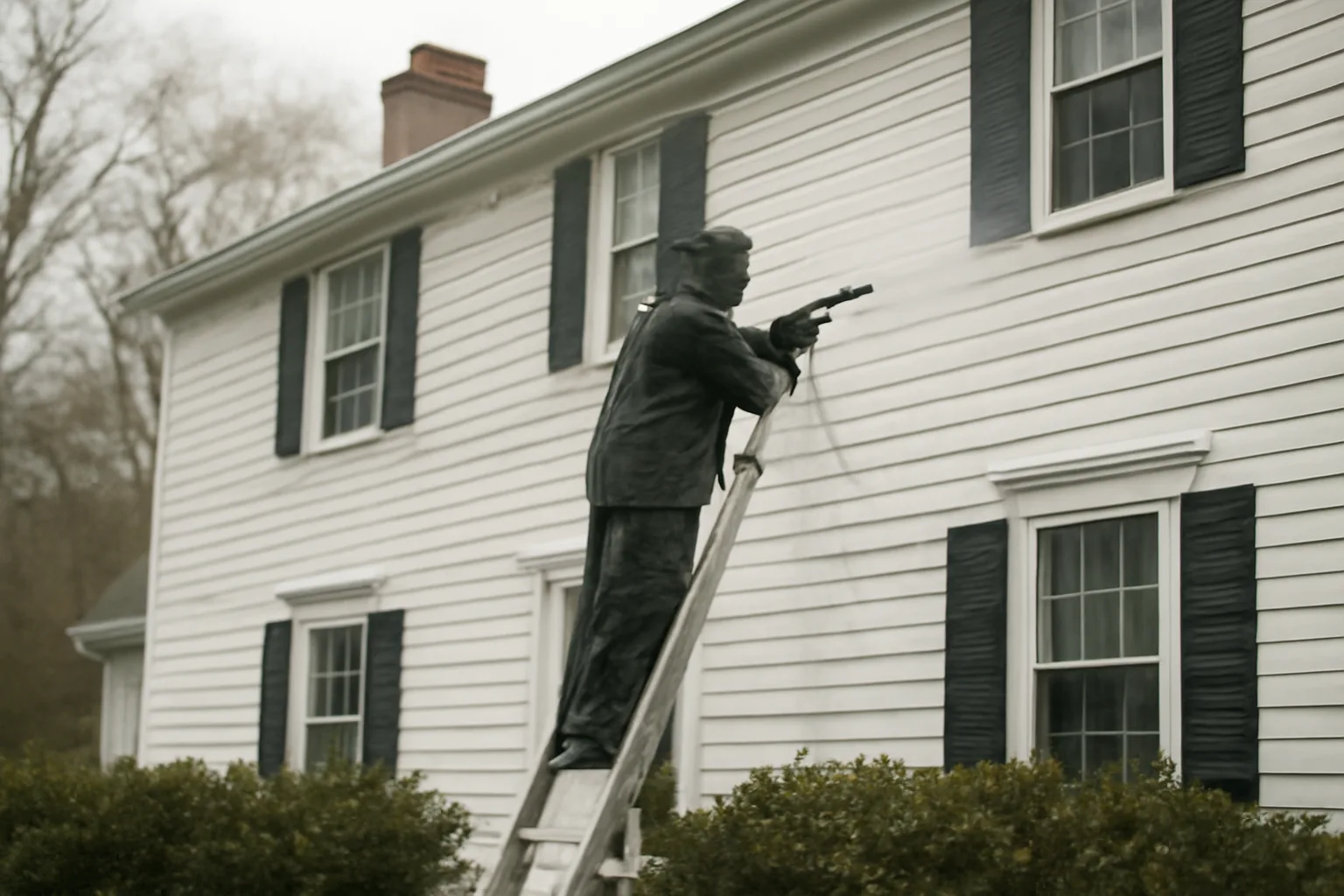
| Two-story house (exterior walls) | $350, $600 |
| Roof soft wash (1,500 to 2,500 sq ft) | $300, $700 |
| Driveway or walkway | $100, $250 |
| Deck or patio | $150, $350 |
These are market rates based on contractor survey data aggregated by home services platforms [5]. Individual quotes vary by square footage, pitch, degree of biological growth, and travel distance from the contractor's base.
Roof soft washing commands the highest per-square-foot rate. The reasons are liability exposure, the requirement for low-pressure application (high pressure voids most shingle warranties), and the specialty chemistry involved. The Asphalt Roofing Manufacturers Association recommends low-pressure cleaning with appropriate biocide solutions to avoid shingle damage [6].
Connecticut's climate drives demand. The state averages 44 to 52 inches of rain a year, with heavy humidity from June through September [7]. That moisture load accelerates the growth of Gloeocapsa magma, the blue-black algae that stains asphalt roofs, and moss on north-facing surfaces. Homeowners in wooded suburbs, particularly along the shoreline from Greenwich to Stonington, deal with heavy organic growth every two to three years.
Connecticut's minimum wage is $16.35 per hour as of 2024 [8], which sets a floor on labor cost calculations. Fuel, chemical, and insurance costs push the break-even point for a two-person crew higher than operators moving from lower-cost states expect.
How long does a soft wash job take in Connecticut?
Most residential soft wash jobs run two to four hours for a single-story home and three to six hours for a two-story home, including setup, application, dwell time, and rinse. Roof jobs on steeper pitches or heavily stained surfaces run longer.
Dwell time is the variable most operators underestimate. The cleaning chemistry, typically a sodium hypochlorite solution with a surfactant, needs contact time to break down biological growth at the cellular level. On a heavily colonized roof, that can mean 15 to 30 minutes of dwell before rinsing. On lightly stained vinyl siding, five minutes may be enough.
Connecticut weather adds another variable. Application in direct summer sun speeds evaporation and can cause streaking if the operator isn't careful. Most experienced operators in the state prefer morning application or overcast days for larger jobs. Wind matters too. Anything above about 15 mph makes safe chemical application difficult on roofs and tall surfaces.
For scheduling, a two-person crew can typically complete two to three residential jobs in a full day during good weather. A single operator working alone should plan for one residential job per day on anything above a single-story house.
What insurance do Connecticut soft wash operators need to renew legally?
The DCP's HIC registration requires general liability coverage, and most carriers writing soft wash policies in the Northeast write at $1,000,000 per occurrence / $2,000,000 aggregate because that's what commercial clients and property managers require [1].
The catch with general liability for soft wash is that standard GL policies often exclude or limit coverage for damage from chemical application. When you renew your HIC registration, your GL certificate needs to actually cover what you do. Read the exclusions. A "pesticide application" exclusion can catch sodium hypochlorite formulations if your broker didn't structure the policy correctly.
Workers' compensation is required by Connecticut law for any employer with one or more employees [2]. The state runs a residual market through the Connecticut Workers' Compensation Commission if private insurers decline coverage. That's unusual for cleaning businesses, but it exists.
Commercial auto insurance is a separate line if your truck is used for business. A personal auto policy does not cover a vehicle used to transport equipment and chemicals for hire. Connecticut requires minimum liability limits for all vehicles on public roads, but those minimums sit far below what you'd want for a loaded soft wash rig.
Want a single document that consolidates chemical handling, dwell protocol, and insurance documentation before you talk to a broker? SoftWashPath's Chem + Dwell + Insurance Kit at /start organizes that into one reference. It's a starting point, not a substitute for a licensed insurance broker who knows Connecticut commercial lines.
Are there chemical or environmental rules specific to Connecticut?
Yes, and this is an area where Connecticut is stricter than most states. The Connecticut Department of Energy and Environmental Protection (DEEP) regulates pesticide application under state pesticide control law [9]. Sodium hypochlorite solutions are not classified as pesticides under federal FIFRA, but algaecide-labeled products and biocide formulations may be, depending on their EPA registration status.
Apply any product that carries an EPA registration number and a claim to kill organisms (algae, mildew, moss), and Connecticut requires a commercial pesticide applicator license from DEEP [9]. The commercial applicator license is separate from the HIC registration and has its own exam, fee, and renewal cycle.
Many soft wash operators use straight sodium hypochlorite diluted with water and a non-ionic surfactant. That formulation, when those specific chemicals carry no EPA label claims, typically falls outside the applicator requirement. But the line is fact-specific. If you're using a branded product that says "kills algae" on the label and carries an EPA Reg. number, you may need the applicator license. Confirm with DEEP before you assume you're exempt.
Connecticut also has stormwater runoff rules under its general permit for stormwater discharge associated with commercial activity [10]. Runoff from soft wash jobs that contains cleaning chemicals cannot flow directly into storm drains or surface water. This isn't theoretical. DEEP has issued compliance orders to exterior cleaning companies for runoff violations. Berm and collect, or direct runoff to pervious surfaces away from drains.
What does the Connecticut HIC renewal timeline look like year by year?
The two-year HIC registration cycle means every operator should have a renewal task on the calendar 90 days before expiration. Here's the practical sequence most Connecticut operators use.
90 days out: Pull your current certificate and check the expiration date. Contact your insurance broker to confirm your GL policy will be current through the next two-year period and that the certificate language matches DCP requirements.
60 days out: Log into the DCP eLicensing portal, confirm your contact information is current, and submit the renewal application with the insurance certificate attached. Pay the renewal fee online.
30 days out: Confirm the renewal has processed and download the updated registration certificate. Update your vehicle signs, contracts, and website with the new registration period if DCP issues a date-stamped certificate.
At renewal: If you've added employees since your last registration, add workers' comp documentation. If your business name or address changed, update it at renewal, not after.
The DCP does send renewal notices, but don't rely on them. Email addresses go stale, mail goes to old addresses, and the responsibility for keeping the registration current sits with the operator, not the state.
How does Connecticut compare to neighboring states for soft wash licensing?
Connecticut's HIC registration requirement puts it in line with most of its neighbors. Rhode Island has a similar contractor registration requirement. Massachusetts requires a Home Improvement Contractor registration through the Office of Consumer Affairs, with insurance requirements comparable to Connecticut's. New York State has contractor registration requirements that vary by county and municipality, with New York City having the most complex local permit stack.
If you work across state lines, particularly in the Tri-State area near the New York or Rhode Island borders, you may need separate registrations in each state. That's common for companies based in Fairfield County who take jobs in Westchester.
Some states impose essentially no registration requirement on exterior cleaning. Soft wash renewal in Delaware covers a lighter regulatory environment. Soft wash renewal in Florida is relevant for Connecticut operators who also work seasonally in the Southeast. Soft wash renewal in Georgia and soft wash renewal in Alabama show how the licensing burden varies by region.
Connecticut's general liability minimums are consistent with New England norms. What makes Connecticut distinct is the DEEP pesticide layer and the stormwater compliance obligation, neither of which is as actively enforced in most Southern or Midwestern states.
What local permits might Connecticut soft wash operators need beyond the HIC?
Several Connecticut municipalities require a local business license or certificate of registration separate from the state HIC. Hartford, New Haven, Bridgeport, Stamford, and Waterbury each have business licensing requirements administered through their town or city clerk offices [3]. The fees and paperwork vary. Most are simple annual renewals with a flat fee.
Some towns also require a solicitation or canvassing permit if you're actively prospecting door to door. This isn't unique to cleaning businesses, but it does catch new operators who assume a state registration covers everything.
If you store chemicals on site, whether at a commercial facility or in a vehicle parked at a residential address overnight, Connecticut's hazardous materials storage regulations may apply depending on volume. DEEP's chemical reporting and storage thresholds cover bulk quantities of many common inputs [10]. Sodium hypochlorite in bulk is on covered chemicals lists.
For municipalities near Long Island Sound or inland waterways (Mystic, Guilford, Essex, Old Saybrook), local conservation commissions sometimes require advance notice before work near wetland buffer zones. A soft wash on a waterfront property with spray drift potential is the kind of job worth a quick call to the town before you schedule.
How do you get ready for a smooth Connecticut HIC renewal?
The operators who have smooth renewals treat compliance as a calendar item, not a crisis. A few habits make renewal straightforward.
Keep your insurance certificates in one folder, physical or digital. Your broker should send updated certificates automatically when your policy renews, but confirm they're using DCP's required certificate language.
If you've had any complaints filed with the DCP during the registration period, address them before renewal. Unresolved complaints can delay or block renewal. The DCP's complaint lookup is public, so customers can see your record.
If your business structure changed during the registration period (added a partner, moved from sole proprietor to LLC, changed your trade name), those changes need to show up in your renewal filing. Mid-period structure changes sometimes require notification to DCP before renewal.
Knowing your sodium hypochlorite dilution ratios, dwell times, and application procedures isn't just good practice for the job itself. It's the documentation a DEEP compliance inspector or an insurance adjuster would ask for if something went wrong. SoftWashPath's reference kit at /start is one tool operators use to get that documentation in order before they're asked for it.
Comparing the Connecticut renewal process to how other states structure contractor registration? Soft wash renewal in Illinois and soft wash renewal in Colorado offer useful comparison points.
Frequently asked questions
Do you need a license for soft wash in Connecticut?
Most operators do. Connecticut requires a Home Improvement Contractor (HIC) registration from the Department of Consumer Protection for anyone performing exterior cleaning on residential property for compensation. There is no separate "soft wash license," but the HIC registration is the functional equivalent. Local business licenses and, in some cases, a DEEP pesticide applicator license may also be required depending on the products you use.
How much does soft wash cost in Connecticut?
Residential soft wash jobs in Connecticut typically run $200 to $400 for a single-story home and $350 to $600 for a two-story home. Roof soft washing generally runs $300 to $700 depending on square footage and growth severity. Connecticut prices sit above the national median because of higher labor costs, insurance premiums, and input costs. Individual quotes vary by surface area and condition.
How long does soft wash take in Connecticut?
A single-story residential job usually takes two to four hours from setup to rinse, including dwell time. A two-story home runs three to six hours. Roof jobs vary more based on pitch and staining. Dwell time for the cleaning solution ranges from five to thirty minutes depending on biological load. Weather conditions, particularly wind and direct sun, can extend the job.
How often does the Connecticut HIC registration need to be renewed?
The Home Improvement Contractor registration renews every two years through the Connecticut Department of Consumer Protection's eLicensing portal. Operators should submit renewal 60 days before expiration to avoid a lapse. Working with an expired registration is a statutory violation and can void your contract dispute protections under Connecticut's home improvement statute.
What insurance does Connecticut require for soft wash contractors?
The DCP requires general liability insurance for HIC registration, and most soft wash carriers in the Northeast write at $1,000,000 per occurrence. The policy must cover the type of work you actually perform, including chemical application. Operators with employees also need workers' compensation insurance. Standard GL policies sometimes exclude chemical application damage, so review your policy exclusions carefully with a commercial lines broker.
Does soft washing in Connecticut require a pesticide applicator license?
It depends on the products you use. If you apply any EPA-registered product with a label claim to kill or control organisms (algae, mildew, moss), Connecticut DEEP requires a commercial pesticide applicator license. Plain sodium hypochlorite diluted with water and surfactant typically falls outside this requirement, but the line is product-specific. Confirm with DEEP before assuming you're exempt.
Are there stormwater rules that affect soft wash jobs in Connecticut?
Yes. Connecticut's DEEP stormwater regulations prohibit chemical-laden runoff from flowing directly into storm drains or surface water. Soft wash operators are responsible for controlling runoff on every job. This means berming, directing flow to pervious surfaces, or collecting and disposing of runoff properly. DEEP has issued compliance orders to exterior cleaning companies for violations.
Do Connecticut towns require separate permits beyond the state HIC registration?
Many do. Hartford, New Haven, Bridgeport, Stamford, and Waterbury have local business licensing requirements administered by the town or city clerk. Some municipalities also require solicitation permits for door-to-door prospecting. Towns near wetlands or Long Island Sound may require advance notice before work near buffer zones. Check with each municipality before starting operations there.
What happens if a Connecticut HIC registration lapses?
Working without a current registration violates Connecticut's home improvement statute. Consequences include state fines, loss of the right to enforce contracts against customers in court, and complaints that affect future registration. The DCP sends renewal notices, but the legal responsibility for keeping the registration current sits with the operator.
Can a Connecticut soft wash operator work across state lines into New York or Rhode Island?
The HIC registration covers Connecticut residential work only. New York and Rhode Island have their own contractor registration requirements. Operators based in Fairfield County who take jobs in Westchester County, New York, need to check New York State and local registration requirements separately. Working across state lines without the appropriate registration in each state creates legal exposure.
How does Connecticut soft wash licensing compare to other states?
Connecticut's requirements are moderate by New England standards, similar to Massachusetts and Rhode Island. The HIC registration, general liability insurance, and DEEP pesticide layer make it more complex than states like Delaware or Alabama, which have lighter registration requirements. States like California and Florida have their own distinct frameworks. See state-specific guides for direct comparisons.
What documents should a Connecticut soft wash operator keep on file for renewal?
Keep your current HIC registration certificate, general liability insurance certificate with DCP-required language, workers' compensation certificate if you have employees, and any DEEP pesticide applicator license if applicable. If you've had complaints filed with DCP, keep records of how they were resolved. Chemical Safety Data Sheets for all products you use round out a complete compliance file.
Sources
- Connecticut Workers' Compensation Commission: Connecticut requires workers' compensation coverage for employers with one or more employees
- Connecticut Department of Consumer Protection: HIC registration is administered by DCP and renewed every two years; municipalities administer separate local business licenses
- Connecticut Department of Consumer Protection, eLicensing Portal: HIC renewal is submitted online through the DCP eLicensing portal
- Angi, House Washing Cost Guide (2024): Residential soft wash and house washing prices by region, used to support Connecticut price range estimates
- Asphalt Roofing Manufacturers Association: ARMA recommends low-pressure cleaning with appropriate biocide solutions for asphalt shingle roofs to avoid shingle damage
- NOAA National Centers for Environmental Information, U.S. Climate Normals: Connecticut averages 44 to 52 inches of annual precipitation with significant summer humidity, accelerating biological growth on exterior surfaces
- Connecticut DEEP, Pesticide Management Program: Connecticut requires a commercial pesticide applicator license from DEEP for anyone applying EPA-registered pesticide products commercially, including algaecide-labeled soft wash formulations
- Connecticut DEEP, Stormwater General Permits: Connecticut stormwater general permit rules prohibit discharge of chemical-laden runoff from commercial activities, including exterior cleaning, into storm drains or surface water